A1
Grammar
Simple Present Tense
What is the simple present tense?
What is the Simple Present Tense?
The simple present tense is used to talk about actions that happen regularly or facts that are always true. It is one of the most important tenses in English. We use it for daily habits, routines, and permanent situations. For example: 'I drink coffee every morning' or 'She lives in London.' The simple present tense helps us describe what we do now and what we do again and again.

Where the Simple Present Tense sits on the English tense timeline
Key Characteristics
The simple present tense uses the base form of the verb for most subjects. However, when the subject is he, she, or it (singular third person), we add -s or -es to the verb. For negative sentences, we use 'do not' or 'does not' before the verb. For questions, we put 'do' or 'does' at the beginning. Remember: the verb stays the same for I, you, we, and they, but changes for he, she, and it.
Examples
Example 1
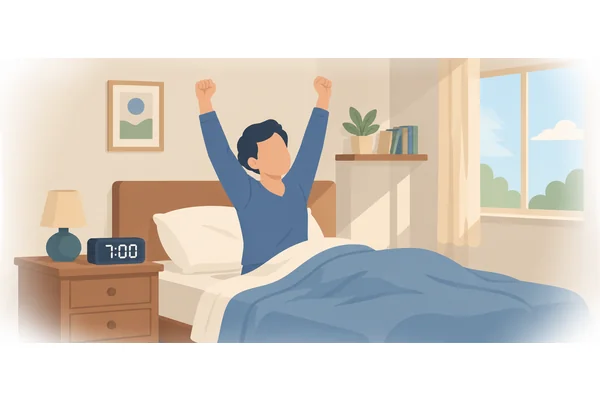
I wake up at 7 o'clock every morning.
Daily routine · Present tense
Example 2
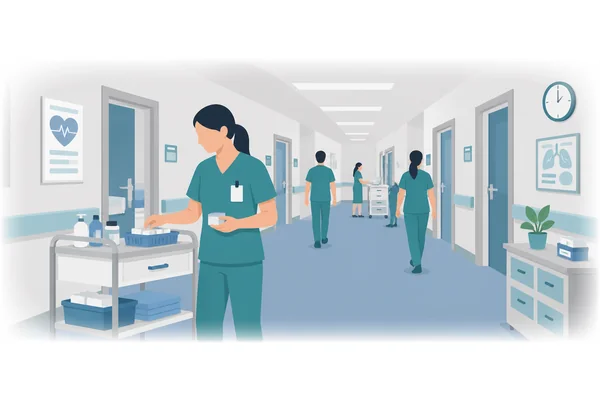
She works in a hospital.
Permanent job · Third person singular
Example 3
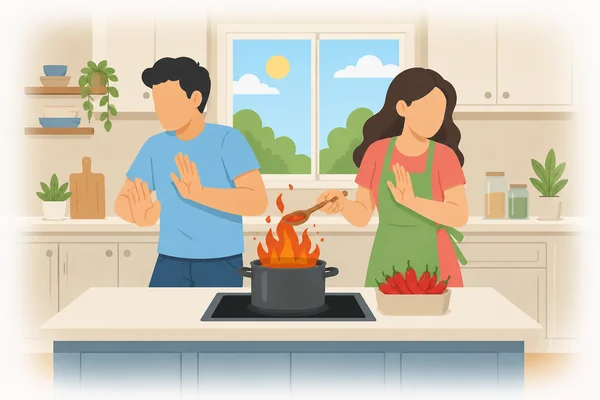
They do not like spicy food.
Negative statement · Preference
Example 4
Does he speak English?
Question · Ability
Example 5
The sun rises in the east.
Scientific fact · Always true
Example 6
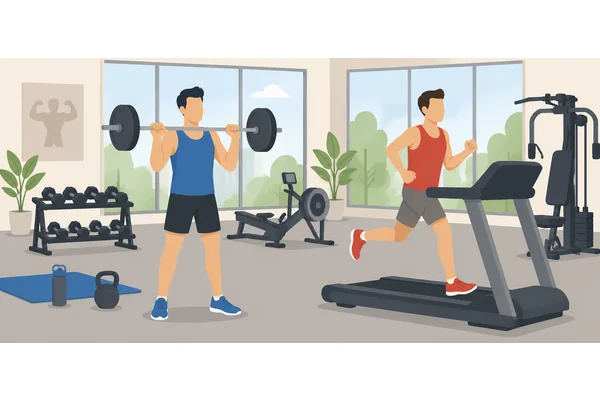
We go to the gym three times a week.
Regular habit · Routine
When to use it
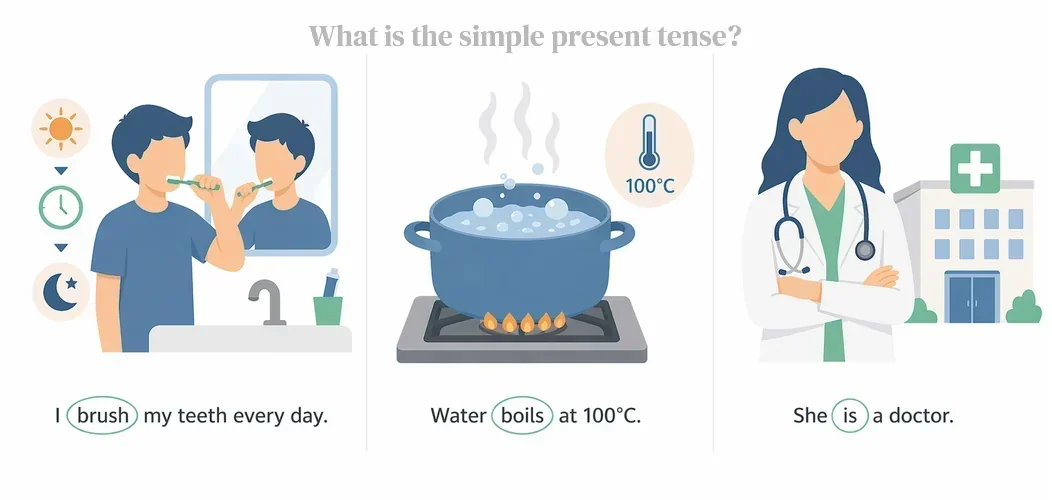
Daily Habits & Routines
Use the simple present to describe what you do every day or regularly. This includes actions that happen many times.
"I brush my teeth twice a day" or "He drinks coffee in the morning."
General Facts & Truths
Use it to talk about things that are always true or facts about the world that don't change.
"Water boils at 100 degrees" or "Paris is the capital of France."
Jobs & Permanent Situations
Use it to describe someone's job, where they live, or their permanent situation.
"She is a doctor" or "They live in New York."
Feelings & States Now
Use it to talk about how you feel right now or your current state, even if it changes later.
"I am happy" or "He feels tired."
Signal words
always
every day
every week
usually
often
sometimes
never
in the morning
at night
regularly
Common mistakes
Wrong
She go to school every day.
Correct
She goes to school every day.
Third person singular (she) needs -s on the verb: 'goes' not 'go'.
Wrong
Do you likes pizza?
Correct
Do you like pizza?
After 'do', use the base form of the verb without -s: 'like' not 'likes'.
Wrong
He no like vegetables.
Correct
He does not like vegetables.
Use 'does not' (or 'doesn't') to make negative sentences, not just 'no'.
Don't use 'am' with other verbs. 'Go' is the main verb here, not a continuous form.
KEY TAKEAWAYS
What to Remember
- Use simple present for habits, routines, and facts that are always true.
- Most subjects use the base form of the verb without changes.
- Add -s or -es to the verb when the subject is he, she, or it.
- Use simple present to describe what you do regularly or what is true now.
- Do not add -s or -es to I, you, we, or they in simple present tense.