A1
Grammar
Simple Present Tense
Simple present tense — negative sentences
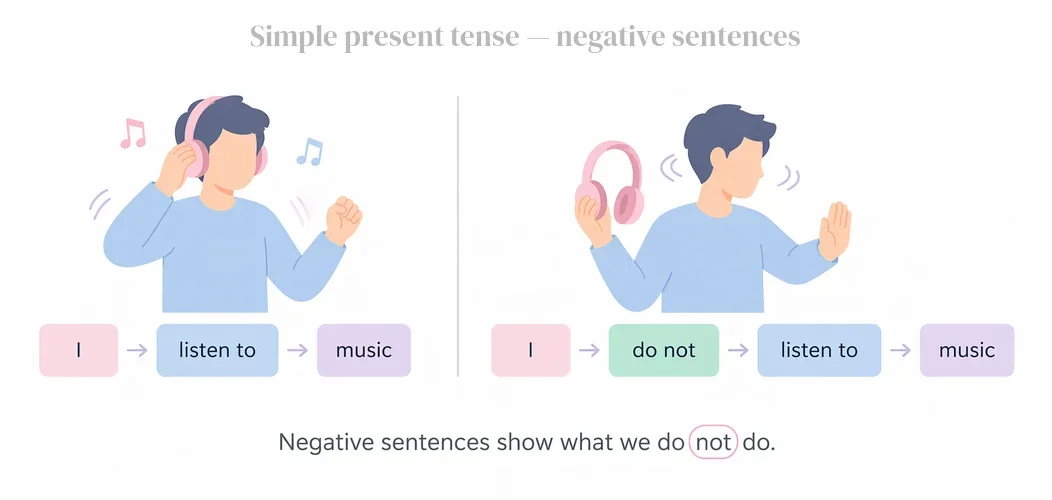
Simple Present Tense: Negative Sentences
To make a negative sentence in the simple present tense, we use do not or does not with the base form of the verb. Use does not with he, she, and it. Use do not with I, you, we, and they. The negative form tells us what someone does NOT do.

Where the Simple Present Tense sits on the English tense timeline
Formula
✖ Negative
Subject (I, you, we, they)
+
do not
+
verb (base form)
I do not like coffee.
Examples

Example 1
I do not speak French.
A1 · Everyday negative statement

Example 2
You do not like chocolate.
A1 · Second person negative

Example 3
He does not work on Sundays.
A1 · Third person singular negative

Example 4
She does not have a car.
A1 · Possession negative

Example 5
We do not go to school on Saturday.
A1 · First person plural negative
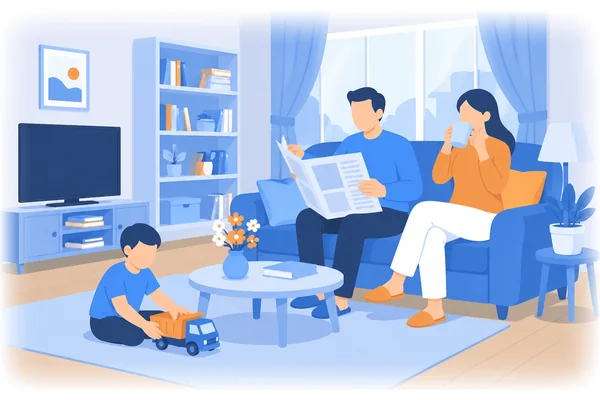
Example 6
They do not watch TV in the morning.
A1 · Third person plural negative
When to use it
Saying What You Don't Do
Use negative simple present to tell someone what you do not do or what is not true about you.
"I do not drink tea. I drink coffee."
Disagreeing
Use negative sentences to politely disagree or correct information about others.
"She does not work here. She works at the hospital."
Stating Facts
Express general facts or regular situations that are NOT true.
"Cats do not eat plants. They eat meat."
Signal words
do not
does not
don't
doesn't
never
not
Common mistakes
Wrong
She not likes apples.
Correct
She does not like apples.
Use does not + base verb, not not + verb. Never add -s to the verb.
Wrong
I does not understand.
Correct
I do not understand.
Use do not with I, you, we, they. Use does not only with he, she, it.